
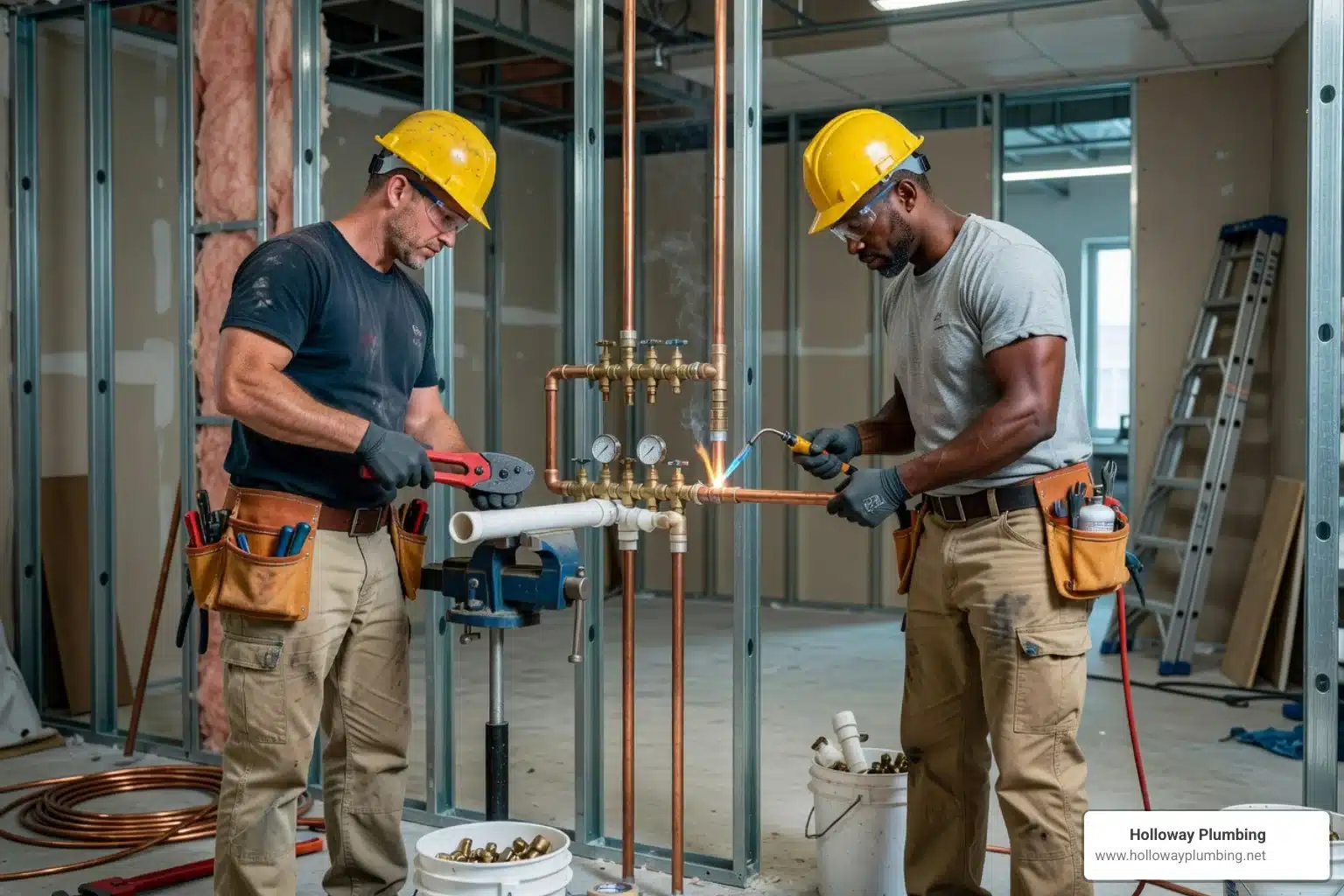
When we talk about commercial plumbing installation, we aren’t just talking about a bigger version of a kitchen sink. Commercial systems are engineered to endure constant, high-volume use that would make a residential system crumble. In a home, a toilet might be flushed ten times a day; in a busy Hill Country restaurant or retail center, that same fixture might be flushed hundreds of times.
Commercial plumbing uses heavier-duty materials, larger pipe diameters to handle higher water demand, and a far more complex “tree” of supply and waste lines throughout the building.
Residential vs. Commercial: A Quick Comparison
| Feature | Residential Plumbing | Commercial Plumbing |
|---|---|---|
| Water Volume | Low to moderate | Extremely high/constant demand |
| Pipe Durability | Standard PVC/Copper | Heavy-duty, corrosion-resistant materials |
| Fixture Count | Small (2-4 bathrooms) | Massive (Multi-story restroom cores) |
| Code Requirements | Standard building codes | Strict health, safety, and ADA compliance |
| Complexity | Simple gravity-fed systems | Complex pumps, risers, and specialized traps |
Because of these differences, commercial plumbing services require a different set of certifications and a deeper understanding of engineering. Whether we are working on a hospital in Fredericksburg or a multi-family housing complex in Boerne, we have to ensure the system can handle the “peak load”—that moment when every fixture is in use at once.
Hiring licensed professionals for your commercial plumbing installation isn’t just about following the law; it’s about safety. Properly installed systems prevent bacteria buildup, ensure clean drinking water through backflow prevention, and manage waste safely to protect the public health of our Texas Hill Country communities.
Common Types and Specialized Services
No two businesses have the same plumbing needs. A boutique shop in Comfort has vastly different requirements than a manufacturing facility in Kerrville. We categorize these projects into three main types:
- New Construction: Starting from the ground up. This involves laying site utilities (underground water and sewer lines) before the slab is even poured.
- Tenant Buildouts: This is common when a business moves into an existing shell. For example, converting a former office space into a restaurant requires adding grease traps, floor drains, and high-capacity gas lines.
- Fixture Upgrades: Replacing aging, inefficient toilets and faucets with modern, sensor-operated, water-saving models to reduce utility costs.
Key Services Included in Commercial Plumbing Installation
Beyond the standard pipes and toilets, commercial projects often require specialized systems that residential plumbers rarely touch:
- Backflow Prevention: This is a big one. We install Reduced Pressure Zone (RPZ) assemblies to ensure that if there’s a pressure drop in the municipal line, contaminated water from your building doesn’t flow backward into the city’s clean water supply.
- Grease Traps and Interceptors: Essential for any food service business. These units capture fats, oils, and grease (FOG) before they reach the main sewer line, preventing massive clogs and city fines.
- Commercial Water Heaters: We install high-recovery tanks or large-scale tankless manifolds that provide endless hot water for hotels, gyms, and industrial kitchens.
- Specialized Drainage: This includes trench drains for parking garages or “sanitary” floor drains for hospitals and food prep areas that are designed to resist bacteria and corrosion.
- Boiler Systems and Gas Lines: Many commercial buildings rely on natural gas or propane for space heating and large-scale cooking. These require precision welding and strict pressure testing.
Navigating the Project Lifecycle and Compliance
A successful commercial plumbing installation is a carefully managed process that depends on close coordination with other trades, like electricians, HVAC teams, and general contractors, to keep the project moving. If the plumber falls behind during the rough-in phase, drywall cannot begin, timelines slip, and the entire job can slow down.
In the Hill Country, we also have to be experts in local building regulations. Each municipality, from Fair Oaks Ranch to Bandera, may have slightly different codes regarding pipe materials or venting requirements. Our job is to manage the permitting process and ensure that when the inspector arrives, the system passes the first time.
Steps Involved in a Successful Commercial Plumbing Installation
We follow a rigorous process to ensure every joint is tight and every slope is perfect:
- Initial Consultation & Design: We review your blueprints or help design a system that matches your building’s intended use.
- Permitting & Planning: We pull the necessary permits and coordinate with the local water authority.
- Site Utilities & Rough-In: We install the underground lines and the “skeleton” of the system inside the walls (risers, waste stacks, and vent lines).
- Fixture Setting: Once the walls are closed and finished, we install the “trim”—the toilets, sinks, and specialized equipment.
- Pressure Testing & Chlorination: We pump the system to high pressures to check for leaks and sanitize the lines to ensure water safety.
- Final Inspection: The local authority signs off, and we hand over a fully functional system.
Budgeting, Challenges, and Avoiding Costly Mistakes
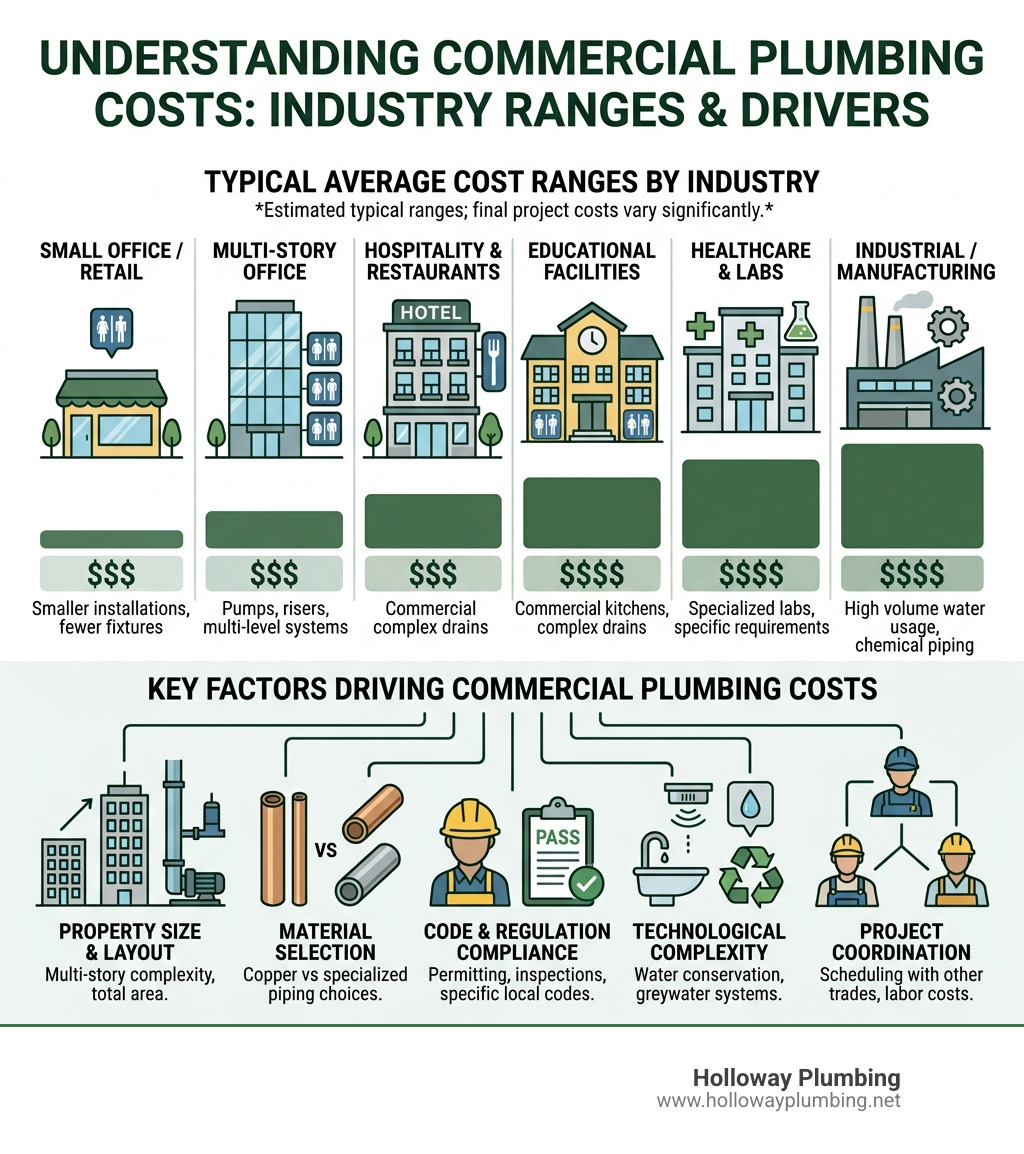
Let’s talk about the elephant in the room: cost. commercial plumbing installation is an investment. While a small office restroom might cost a few thousand dollars, a full-scale industrial or healthcare installation can reach six figures.
Several factors affect the final cost:
- Property Size: Larger or multi-story buildings often need added pumps, risers, and more extensive piping to keep water moving where it needs to go.
- Material Selection: Some materials cost more up front but hold up better under heavy use. Specialized piping for labs or industrial settings can also raise the price.
- Complexity: Adding water conservation features, such as high-efficiency fixtures or water-saving systems, may cost more initially but can reduce monthly utility bills over time.
Common Mistakes to Avoid
The biggest mistake we see is improper pipe sizing. If a pipe is too small, your building will suffer from low water pressure and frequent clogs. If it’s too large, you’ve wasted money on materials.
Another pitfall is ignoring local codes. Trying to cut corners with uncertified fixtures or skipping backflow testing can lead to heavy fines or even the temporary closure of your business by the health department. At Holloway Plumbing, we believe in “Installed Right the First Time” to avoid these expensive headaches.
Maximizing Longevity and Minimizing Business Disruptions
Once your commercial plumbing installation is complete, the goal is to make sure you never have to think about it again. The best way to do that is through a preventative maintenance plan.
Commercial systems are under constant stress. Small leaks or minor mineral buildups in the Hill Country’s hard water can quickly escalate into “emergency” status. We recommend scheduled inspections to check water pressure, test backflow preventers, and “jet” your sewer lines to keep them clear of debris.
Minimizing Downtime
We know that for a business, time is money. If you are doing a renovation or an upgrade, we often perform overnight repairs or phased installations. This allows your employees and customers to use the building during the day while we do the heavy lifting while the lights are out.
Our 24/7 emergency plumbing support ensures that if a pipe does burst at 3 AM in a Kerrville hotel, we are there to fix it before breakfast is served. This level of reliability is what has kept us in business for nearly five decades.
Frequently Asked Questions about Commercial Plumbing
How much does commercial plumbing installation cost?
Costs vary wildly based on scope. A simple restaurant buildout might range from $5,000 to $25,000, while a large-scale medical facility or apartment complex can exceed $100,000. We provide transparent, upfront pricing after a thorough site or blueprint review.
How long does the installation process typically take?
A standard tenant buildout usually takes between 5 to 10 days of active labor, spread across different phases of the construction schedule. New construction for a large building can take months, as we are one of the first trades on-site and one of the last to leave.
Why can’t I use a residential plumber for my business?
Residential plumbers often lack the heavy-duty equipment (like large-scale drain cleaners or pipe welders) and the specific knowledge of commercial codes. A mistake in a commercial building can lead to massive water damage or health department violations that a residential-only plumber might not anticipate.
Conclusion
Your plumbing system is the circulatory system of your business. When it’s working well, nobody notices—but when it fails, everything stops. Investing in professional commercial plumbing installation is the best way to ensure your business remains productive, safe, and compliant with Texas regulations.
At Holloway Plumbing, we’ve spent nearly 50 years serving the Texas Hill Country, from Fredericksburg to Fair Oaks Ranch and everywhere in between. We understand the unique challenges of our local water and the high standards our local business owners expect. Whether you are breaking ground on a new project or upgrading your current facility, our team of licensed experts is ready to provide fast, reliable, and expert service.
Contact our commercial plumbing specialists and schedule your services today. Let us help you build a foundation for your business’s success.