

What to Do When Your Water Heater Pilot Light Keeps Going Out
Your water heater pilot light is a small flame that ignites the gas burner, and when it goes out, you lose hot water fast.
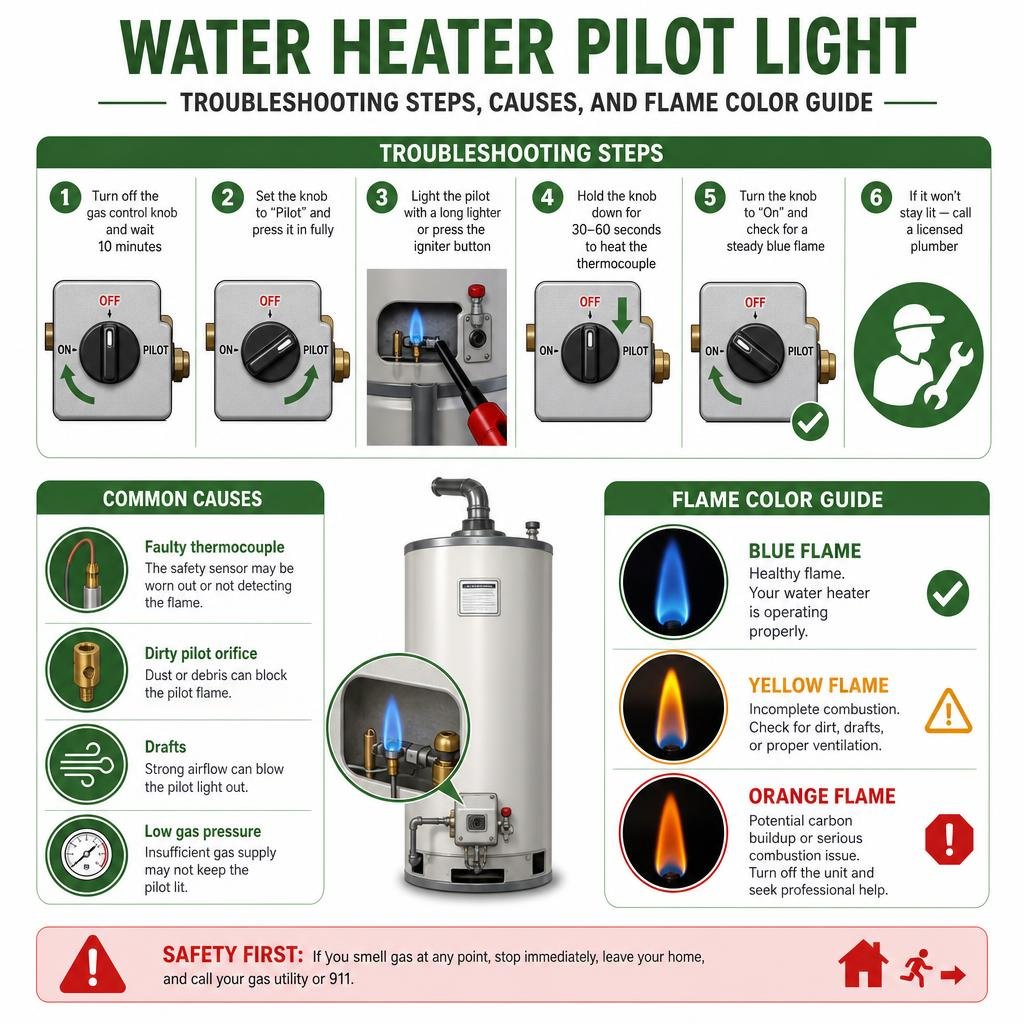
Quick answer: Here’s what to do if your pilot light is out:
- Turn off the gas control knob and wait 10 minutes
- Set the knob to “Pilot” and press it in fully
- Light the pilot with a long lighter or press the igniter button
- Hold the knob down for 30–60 seconds to heat the thermocouple
- Turn the knob to “On” and check for a steady blue flame
- If it won’t stay lit, call a licensed plumber
The most common culprit is a faulty thermocouple, the safety sensor that detects whether your pilot flame is burning. Other causes include dirty pilot orifices, draft problems, and low gas pressure.
If you smell gas at any point, stop immediately, leave your home, and call your gas utility or 911.
At Holloway Plumbing, our team helps homeowners across the Texas Hill Country diagnose and repair water heater pilot light failures, especially after storms, gas interruptions, or long periods of heavy water heater use. Below, we’ll walk you through exactly why it happens and what to do about it.
Understanding Your Water Heater Pilot Light and How It Works
To understand why your water heater pilot light keeps going out, it helps to understand exactly what this little flame does. In traditional gas water heaters, the pilot light is a small, continuously burning flame. Its primary job is to act as the ignition source for the main gas burner. When the thermostat inside your water heater detects that the water temperature has dropped, it signals the gas valve to open. The pilot light instantly ignites this gas, heating your water back up to your desired temperature.
There are two main ignition systems found in residential gas water heaters today:
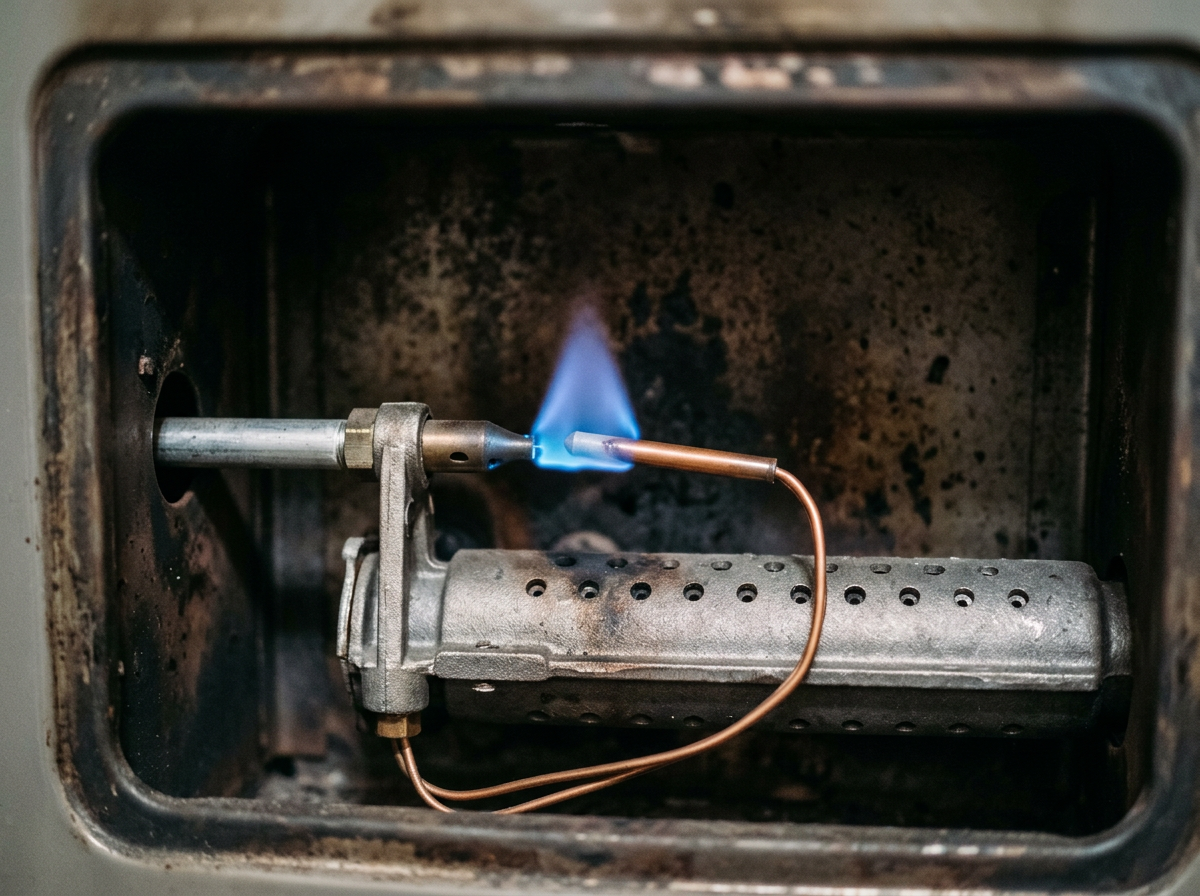
- Standing pilot systems: Common in older units, these systems use a small flame that stays lit so the main burner can ignite when the tank needs to reheat.
- Electronic ignition systems: Modern water heaters often use an electronic spark or hot-surface igniter instead of a standing pilot. These systems ignite only when there is a call for hot water, which can improve energy efficiency and reduce constant gas use.
Regardless of which system you have, water heating is a major energy consumer. In fact, water heating accounts for roughly 24% of total household energy consumption in a typical four-person U.S. home. When the system fails to fire up, your daily routine grinds to a cold halt.
The unsung hero of this process is the thermocouple. This is a thin copper rod that sits directly in the path of the pilot flame. When heated, the thermocouple generates a tiny electrical current (millivolts) that signals the gas control valve to remain open. If the pilot light goes out, the thermocouple cools down, the electrical current stops, and the gas valve automatically snaps shut. This safety mechanism prevents dangerous, unburned gas from leaking into your home.
Why Your Pilot Light Keeps Going Out: Common Causes
If you find yourself relighting your water heater pilot light every few days, you aren’t dealing with a one-time fluke. There is an underlying mechanical or environmental issue at play.
Before diving into the technical details, it is helpful to inspect the physical flame. The color of your pilot flame is one of the best diagnostic indicators of your system’s health:
| Flame Color | Meaning | Action Required |
|---|---|---|
| Steady blue (with small yellow/orange tip) | Healthy combustion; proper gas-to-oxygen mixture. | None. The system is operating normally. |
| Solid yellow or bright orange | Incomplete combustion; dirty burner or lack of fresh air. | Clean the pilot assembly and check ventilation. |
| Weak, flickering, or wavering blue | Draft issues or low gas pressure. | Seal nearby drafts; check gas supply lines. |
If your flame is burning poorly or will not stay lit at all, the issue usually comes down to one of the common causes below.
For homeowners in Kerrville, Fredericksburg, Boerne, Bandera, Ingram, Hunt, Fair Oaks Ranch, and Comfort, Holloway Plumbing helps diagnose pilot light problems, burner issues, tank failures, and replacement needs with reliable water heater service across the Texas Hill Country.
Thermocouple Malfunctions
A faulty thermocouple is the most common reason a water heater pilot light fails to stay lit. Because this copper sensor must sit directly in the flame, it is subjected to intense heat and wear over time.
- Soot and dirt buildup: Carbon residue can coat the tip of the thermocouple, insulating it from the heat of the flame. When this happens, it cannot generate the voltage needed to keep the gas valve open.
- Misalignment: Sometimes, the thermocouple simply gets bent or bumped away from the flame. If the tip isn’t engulfed in the hottest part of the blue flame, it won’t stay warm enough to operate.
- Electrical wear: Over time, the internal wires of the thermocouple degrade and fail to transmit the electrical signal, requiring a complete replacement.
Gas Supply and Pressure Issues
Your water heater requires a steady, uninterrupted flow of gas at a specific pressure. If the gas pressure fluctuates, the pilot flame will flicker and die.
- Old gas meters: In some cases, a failing gas meter on the exterior of your property can cause pressure drops.
- Clogged pipes or orifices: Small particles of rust or sediment can travel through the gas lines and clog the tiny pilot orifice. A clogged orifice restricts gas flow, resulting in a weak flame that easily goes out.
- Lack of a sediment trap: Modern gas lines should have a “drip leg” or sediment trap installed right before the gas valve to catch debris before it clogs the unit.
Drafts and Poor Ventilation
Gas water heaters need a continuous supply of fresh, combustible air to burn efficiently, as well as a clear pathway to vent exhaust gases.
- Closet drafts: If your water heater is located in a garage, utility closet, or basement, sudden drafts from opening doors or windy days can physically blow the flame out.
- Insufficient airflow: If a water heater is installed in a closet that is too small or lacks proper venting, it will quickly consume the available oxygen. This starves the flame, causing the pilot to extinguish and potentially releasing carbon monoxide into the space.
How to Safely Relight Your Water Heater
Before you attempt to light your pilot, you must prioritize safety. Working with gas appliances carries inherent risks of fire, explosion, or carbon monoxide poisoning if handled improperly.
First and foremost: Perform a sniff test. Natural gas is naturally odorless, but utility companies add a chemical called mercaptan to give it a distinct “rotten egg” smell.
- If you smell gas, do not attempt to light the pilot.
- Do not turn any light switches on or off, and do not use your phone inside the house.
- Evacuate everyone from the building immediately and call 911 or your gas provider from a safe distance.
If there is no smell of gas and you are simply dealing with a cold tank, you can proceed. If you find your hot water suddenly not working, don’t get left in the cold trying to guess your way through the process. Follow our structured guide below.
Step-by-Step Guide to Safely Relighting a Water Heater Pilot Light
To manually light older models or operate the built-in piezo igniter on newer units, follow these steps:
- Clear the area: Ensure there are no flammable liquids, aerosol cans, or piles of lint and clutter around the base of the water heater.
- Shut off the gas: Locate the gas control valve knob on the front of the water heater. Turn it to the OFF position.
- Wait for gas to dissipate: This is the most crucial safety step. Wait at least 10 minutes to allow any residual gas in the combustion chamber to completely dissipate before introducing an ignition source.
- Prepare the controls: Turn the gas control knob to the PILOT position. Remove the outer metal access panel at the bottom of the tank to locate the pilot burner assembly.
- Ignite the flame:
- For units with a piezo igniter: Press and hold the gas control knob down fully. While holding it down, press the igniter button repeatedly until you see a flame through the sight glass.
- For manual units: Press and hold the control knob down while carefully placing a long fireplace lighter next to the pilot burner tip. Keep your face, hands, and loose clothing away from the burner opening.
- Hold the knob: Once the flame is lit, continue holding the gas control knob down for 30 to 60 seconds. This gives the thermocouple enough time to heat up and generate the electrical current needed to hold the valve open.
- Release and switch to ON: Slowly release the knob. Ensure the flame stays lit. If it does, turn the knob to the ON position. You should hear the main burner roar to life. Reinstall the access panel.
If the pilot will not stay lit after these steps, Holloway Plumbing also offers plumbing service in Kerrville, TX for related gas appliance, water heater, and emergency plumbing concerns throughout the Hill Country.
When to Call a Professional for Water Heater Pilot Light Issues
While relighting a pilot is a standard homeowner task, certain situations require the expertise of a licensed plumber. You should call us immediately if:
- You smell gas: Never take risks with gas odors or hissing sounds.
- The pilot flame is yellow or orange: This indicates incomplete combustion, which can produce dangerous levels of carbon monoxide.
- The pilot goes out immediately after you release the knob: This usually means the thermocouple is completely dead or there is a control valve failure.
- The water heater is old: If your unit is more than 10 to 12 years old, parts may be severely corroded. In these cases, a full replacement is often more cost-effective than continuous repairs.
When dealing with gas lines, local code compliance matters, and it is safest to have recurring pilot light problems inspected by a licensed professional. If a pilot outage leaves you without reliable hot water, our blog on what to do when hot water suddenly stops working explains how to narrow down the issue before scheduling help.
Frequently Asked Questions
How do I know if my water heater pilot light is out?
The most obvious sign is a sudden lack of hot water throughout your home. If your morning shower is freezing cold, head to your water heater and look at the status light on the gas control valve. On modern units, a status light will flash or show an error code if the pilot is out. On older units, remove the outer metal access panel at the base of the tank and look through the small glass viewing window. If you do not see a small blue flame burning, your pilot light is out.
Is it dangerous if the pilot light goes out?
In modern water heaters, it is generally not dangerous. These units are designed with built-in safety shutoffs. When the pilot goes out, the thermocouple cools down and automatically closes the gas safety valve, preventing gas from leaking into your home. However, older appliances manufactured several decades ago may lack these robust safety features. Regardless of your system’s age, if you ever smell gas, treat it as an emergency.
How much does it cost to fix a pilot light issue?
The cost depends on the root cause of the failure. If you simply need a professional to diagnose the issue and replace a faulty thermocouple, the part itself is highly affordable, typically costing between $15 and $25. A professional plumbing service call to replace the part and inspect the combustion chamber generally runs between $150 and $300, depending on your location and the complexity of the unit. If the entire gas control valve is faulty, repairs can cost upwards of $400 to $600.
Conclusion
A failing water heater pilot light is more than just a minor inconvenience. It disrupts your entire household’s comfort and can occasionally point to larger safety concerns. While many pilot light issues stem from a simple dirty thermocouple that you can safely troubleshoot yourself, persistent outages require a professional eye to protect your home and family.
At Holloway Plumbing, we have spent nearly 50 years providing the Texas Hill Country with fast, reliable, and expert plumbing services. Whether you are in Kerrville, Fredericksburg, Boerne, or the surrounding areas, our licensed plumbers are available 24/7 to handle your water heater emergencies. At Holloway Plumbing, we have spent nearly 50 years providing fast, reliable, and expert plumbing services throughout the Texas Hill Country. From Kerrville and Fredericksburg to Boerne homes and surrounding communities, our licensed plumbers are available 24/7 to handle water heater emergencies when you need help most.
Don’t spend another day shivering through cold showers. Contact our professional water heater technicians at Holloway Plumbing today!