


Why the Best Place to Install Water Softener Units Matters More Than You Think
The best place to install water softener units in most homes is at the main water entry point, after the water meter (or pressure tank for well water) and before the water heater. This setup treats water as it enters your home, helping protect pipes, fixtures, and appliances throughout the house.
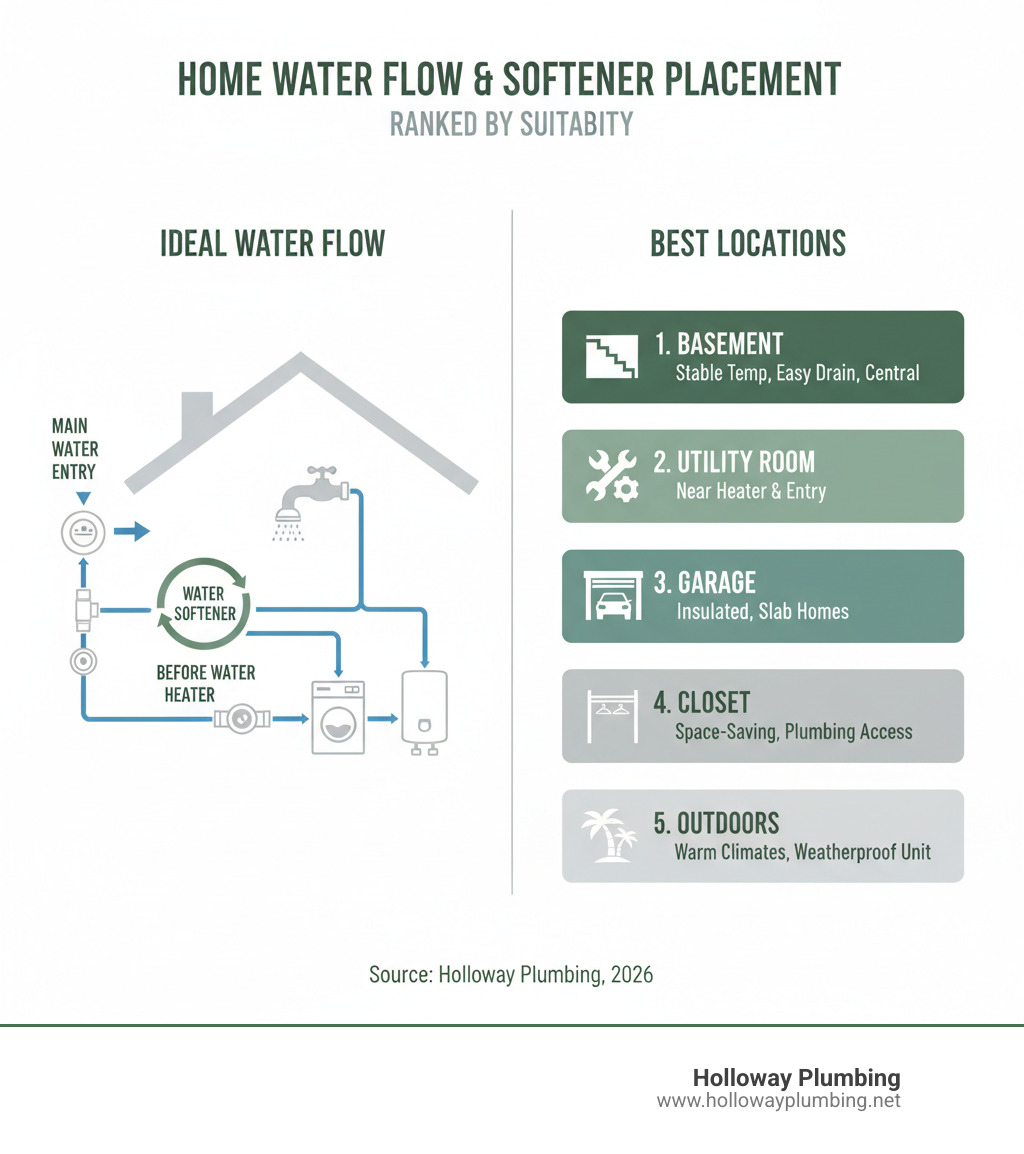
Quick answer — best locations ranked:
- Basement — ideal for most homes; stable temperature, easy drain access, centralized plumbing
- Utility room — great alternative if no basement; near water heater and entry point
- Garage — works well with proper insulation; common in slab homes
- Closet — space-saving option with the right plumbing access
- Outdoors — only viable in warm climates with a weatherproof, UV-rated unit
Hard water is common, not unusual. It affects more than 85% of homes in the U.S., leading to scale inside pipes, shortening appliance life, and increasing energy costs. Put a water softener in the wrong place, or install it without a clear plan, and the system may never work as effectively as it should.
Where you put it changes everything: temperature exposure, drainage options, salt accessibility, and whether the whole house actually gets treated.
At Holloway Plumbing, our team has spent decades serving the Texas Hill Country and helping homeowners determine the best place to install water softener systems based on home layout, water source, and local climate. In the sections below, you’ll learn the key placement factors so you can make a confident, informed decision.
Core Requirements for the Best Place to Install Water Softener
Finding the best place to install water softener equipment isn’t just about where it fits; it’s about where it can actually function. A water softener is a hard-working appliance that requires a specific “ecosystem” to stay healthy and efficient. If you tuck it away in a corner that lacks power or drainage, you’re looking at a very expensive paperweight.
Why the Main Entry is the Best Place to Install Water Softener Units
The basic rule of water softener placement is point-of-entry. To treat water throughout the whole house, the unit should go where water first comes into your home. That way, fixtures and appliances from the kitchen sink to the shower all receive softened water.
For those of us in the Texas Hill Country using city water, this is usually right after the water meter. If you’re on a private well in places like Kerrville or Fredericksburg, the best place to install water softener units is immediately following the pressure tank. If you are considering purchasing a home in Fredericksburg or anywhere else in the Hill Country, keep in mind that proper placement of your water softener ensures every pipe and fixture receives treated water. If you install it too far “downstream,” you might end up with soft water in the laundry room but hard, scale-clogging water in your bathroom.
Essential Drainage and Electrical Specifications
Every water softener needs to “regenerate.” This is the process where the resin beads are flushed with brine to clean off the captured hardness minerals. This process requires two things: a place for the water to go and power to run the control valve.
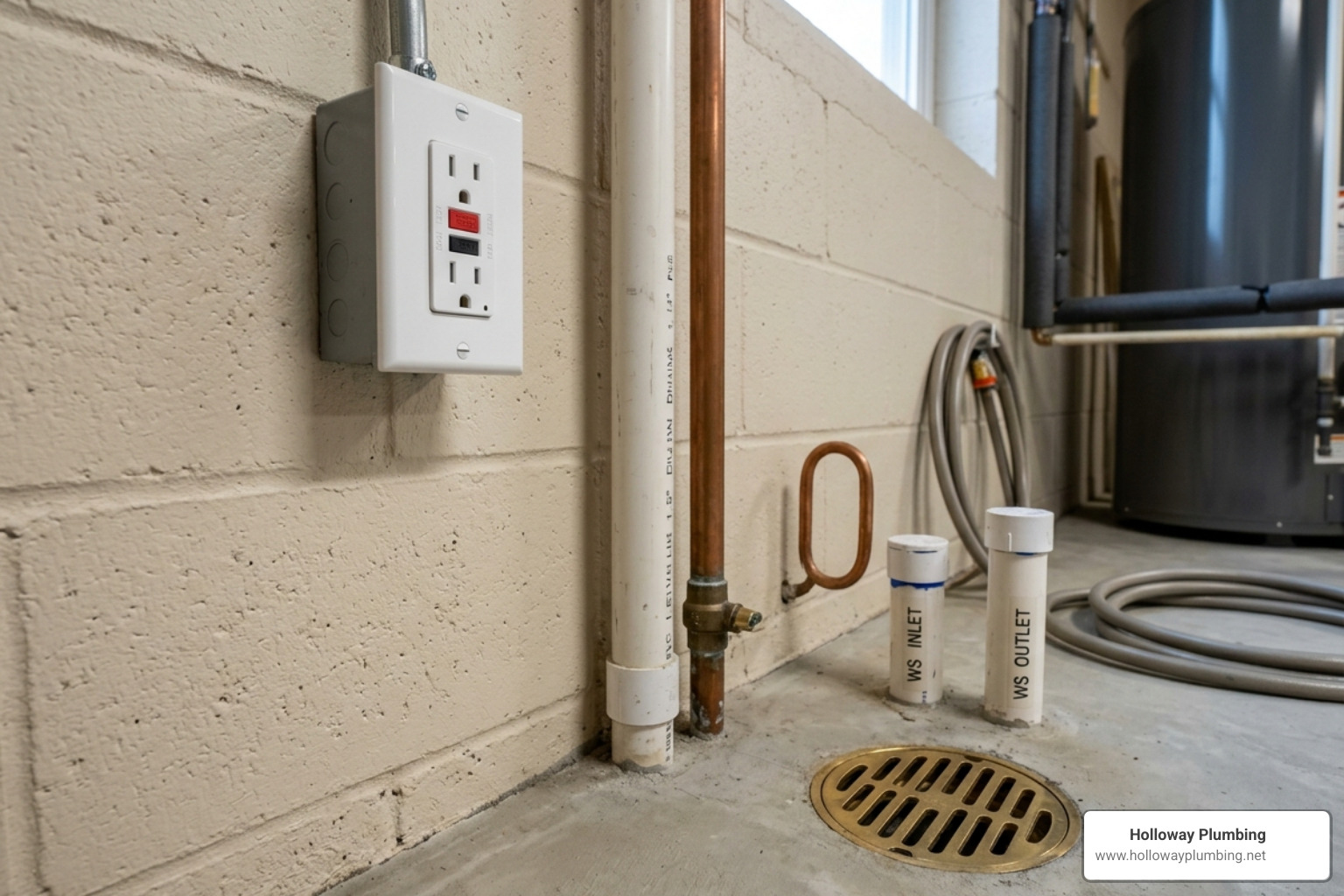
- Power Access: You need a standard 120V electrical outlet. Ideally, this should be a GFCI (Ground Fault Circuit Interrupter) outlet for safety, as it’s near water lines.
- Drainage Access: You have a few options here: a floor drain, a laundry tub, or a standpipe.
- Distance Limits: According to industry standards, your drain line can typically run up to 8 feet vertically above the softener or 30 feet horizontally. Exceeding these limits can cause backpressure issues that prevent the system from cleaning itself properly.
Temperature and Surface Requirements
Water softeners need a stable environment to work properly. The ideal temperature range for operation is 35-100°F. If water inside the unit freezes, it can expand and crack the tank or damage the control valve, which often leads to costly repairs. Very high heat can also shorten the life of the resin. A level, solid surface matters too, because it helps the system operate safely and prevents shifting over time.
Finally, the unit must sit on a level, solid surface. A full brine tank can weigh several hundred pounds (those 40-50 lb salt bags add up fast!), so a concrete slab or reinforced floor is a must to prevent tipping or stress on the plumbing joints.
Comparing Indoor Installation Sites: Basement, Garage, and Beyond
In the Texas Hill Country, our home styles vary from historic builds in Boerne to modern slab homes in Fair Oaks Ranch. This means the “perfect” spot isn’t the same for everyone.
| Feature | Basement | Garage | Utility Room |
|---|---|---|---|
| Freeze Protection | Excellent | Moderate (needs insulation) | Excellent |
| Space Usage | High (out of the way) | Moderate | Low (takes up living space) |
| Drain Access | Usually easy | Moderate | Easy |
| Noise Level | Quietest | Moderate | Can be loud during regen |
Pros and Cons of Basement and Utility Room Placement
If you have a basement, it is often the gold standard for installation. It keeps the equipment out of sight, provides a stable, cool temperature, and usually offers the easiest access to the main water line and a floor drain. The only downside? Lugging those heavy salt bags down the stairs. (Pro tip: If you’re building new, consider a salt chute!)
For many Texas homes without basements, the utility room is the next best thing. It’s usually centrally located near the water heater, which simplifies the plumbing. However, keep in mind that water softeners make noise during their regeneration cycle (often in the middle of the night). If your utility room is right next to a bedroom, you might hear the “whoosh” of water at 2:00 AM.
For more detailed technical guidance, check our page on water softener installation.
Garage and Closet Installations
In slab-on-grade homes, the garage is a very popular choice. It offers plenty of space and keeps the salt mess out of the main house. However, in our region, we do get occasional freezes. If your garage isn’t insulated, you’ll need to wrap the pipes and potentially the unit itself to prevent damage.
Closet installations are a “last resort” but can work for smaller homes or townhomes. You’ll need to ensure there is enough clearance to actually pour the salt into the brine tank. There’s nothing more frustrating than a water softener installed in a spot where you have to be an acrobat just to perform basic maintenance.
Special Considerations: Well Water, Slab Homes, and Outdoor Placement
The “where” becomes even more critical when we look at specific home types or water sources.
Choosing the Best Place to Install Water Softener in Slab Homes
Many newer homes in areas like Bandera or Comfort are built on concrete slabs and come pre-plumbed with a “softener loop.” This is a U-shaped pipe usually found in the garage or a utility closet.
The beauty of a loop is that it often allows for selective softening. This means the plumbing is designed to soften the water going to your faucets and appliances but bypasses your outdoor hose bibs. Since the average person uses 80-100 gallons of water per day, using softened water to water your lawn is a massive waste of salt and money. A loop can reduce salt consumption by 20-30% by keeping the “soft stuff” inside where it belongs.
Is Outdoor Installation Safe?
While common in places like Florida, outdoor installation in the Texas Hill Country requires caution. It is possible, but only under specific conditions:
- Weatherproofing: The unit must have a UV-resistant tank and a waterproof cover for the electronics.
- Shade: Direct sunlight can “cook” the resin and make the plastic components brittle.
- Freeze Protection: You must have an enclosure or shed to protect it during our winter cold snaps.
- Partial Burial: Some installers will partially bury the brine tank to help regulate the temperature using the earth’s natural insulation.
Technical Setup: Plumbing Order and Common Mistakes
Once you’ve picked the best place to install water softener units, you have to make sure the plumbing order is correct. Getting this wrong can lead to reduced efficiency or even damage to your other appliances.
Why Install Before the Water Heater?
You should always install the water softener before the water heater. Why? Because hard water is the #1 enemy of your water heater. When hard water is heated, the calcium and magnesium minerals “fall out” of the water and create a rock-hard scale on the heating elements or at the bottom of the tank.
By installing the softener first, you ensure that only soft water enters the heater. This keeps it running efficiently, lowers your energy bills, and can add years to the unit’s life. Just make sure there is at least 10 feet of piping between the softener and the heater to prevent hot water from backing up into the softener and damaging the resin.
Common Placement Errors to Avoid
- The “Hidden” Softener: Don’t put the unit in a crawl space that is difficult to enter. If it’s hard to get to, you won’t check the salt levels, and the system will eventually stop working.
- High-Humidity Areas: Avoid unventilated attics or damp crawl spaces. High humidity can corrode the electrical components in the control valve.
- Ignoring the Drain Height: Remember the 8-foot vertical limit. If you try to pump the discharge water too high, the system won’t drain properly, leading to “salty” water in the house or a flooded brine tank.
For a deeper dive into sizing and technical specs, quality water treatment offers excellent insights into how flow rates impact your choice of location.
Frequently Asked Questions about Water Softener Placement
Can I install my water softener in a crawl space?
Yes, but it’s rarely the best place to install water softener units. Crawl spaces are often damp, dark, and difficult to access. If you choose this route, you must ensure the ground is level (usually by pouring a small concrete pad) and that you have enough vertical clearance to lift the lid and pour in 40-pound bags of salt. Many homeowners who go this route eventually regret it because the “out of sight, out of mind” factor leads to neglected maintenance.
Should the softener be installed before or after a whole-house filter?
If you have a sediment filter or a carbon filter, it should almost always go before the water softener. The sediment filter acts as a bodyguard, catching dirt and debris that could otherwise clog the softener’s delicate internal valves. If you’re on city water and want to remove chlorine, a carbon filter placed before the softener will also protect the resin beads from chemical damage, making them last much longer.
How much space is required for a standard installation?
Most residential water softeners need a footprint of about 4 to 6 square feet. However, you also need “elbow room” for maintenance. You should have at least 6 to 12 inches of clearance around the unit so a plumber can access the bypass valve or the plumbing connections if a repair is ever needed.
Conclusion: Trust the Hill Country Experts
Choosing the best place to install water softener systems is not something you have to figure out on your own. At Holloway Plumbing, we have served the Texas Hill Country, including Kerrville, Fredericksburg, Boerne, and nearby areas, for nearly 50 years. We understand the local water challenges homeowners face, from heavy limestone minerals in municipal water to the varied mineral content often found in well water.
A professional installation helps keep your system up to code, protects your warranty, and, most importantly, makes sure your home gets the soft water you are paying for. We can assess your home’s layout, find the most efficient plumbing route, and handle the heavy lifting, including the salt bags.
Ready to transform your home’s water quality? Contact our water softener specialists and schedule your expert water softener installation today and let us help you find the perfect spot for your new system.