
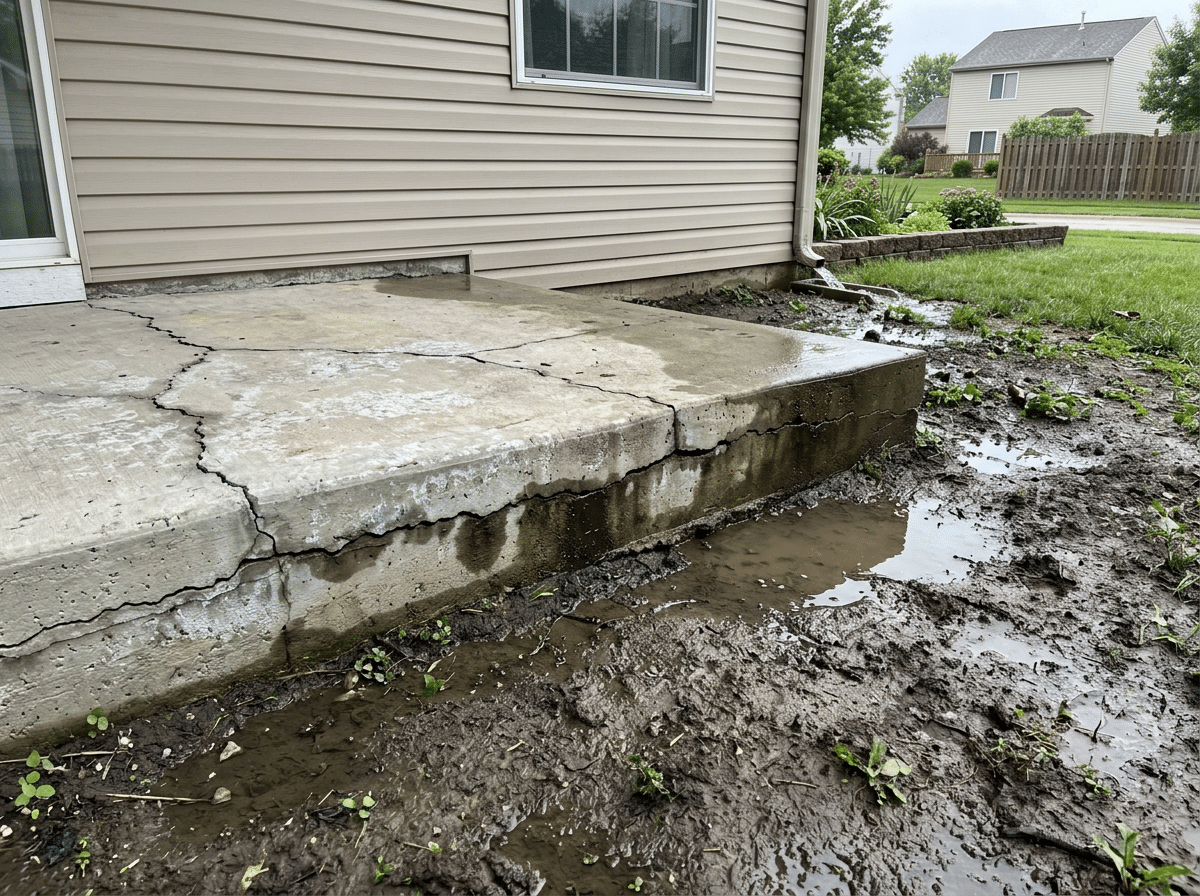

Why Knowing the Signs of a Slab Leak Could Save Your Home’s Foundation
The signs of a slab leak are easy to miss until the damage is already done. Here’s a quick look at what to watch for:
Common signs of a slab leak:
- Unexplained water bill spike — usage goes up but habits haven’t changed
- Sound of running water — heard when all taps and fixtures are off
- Warm or damp spots on floors — especially along hot water line paths
- Sudden drop in water pressure — noticeable at faucets or showers
- Cracks in walls, floors, or foundation — doors and windows may also stick
- Mold, mildew, or musty odors — persistent smells near baseboards or flooring
- Water meter still moving — even when all water in the home is shut off
A slab leak happens when a pipe beneath your home’s concrete foundation begins to fail. Water escapes into the ground or up through your slab, often for weeks or months before you notice anything obvious. According to the EPA, household leaks waste nearly 10,000 gallons of water per year, and many of those losses happen completely out of sight.
Left unchecked, a slab leak doesn’t just waste water. It can erode the soil beneath your foundation, cause structural cracking, and create the kind of damp conditions where mold thrives. The longer it goes undetected, the more expensive the repair.
At Holloway Plumbing, our experienced team has spent decades helping homeowners across the Texas Hill Country identify hidden leaks before they turn into foundation emergencies. Read on to learn exactly what to look for and what to do next.

What is a Slab Leak and What Causes It?
To understand how a slab leak develops, we first have to look at how modern homes in the Texas Hill Country are constructed. Most houses in our region are built using “slab-on-grade” foundations. This means your home sits directly on a thick, solid block of concrete poured over the earth.
Before that concrete is poured, plumbers lay out the primary water supply and sewer lines. Once the concrete cures, those pipes are permanently encased or buried directly beneath the slab.
A slab leak occurs when one of these hidden pipes develops a crack, pinhole, or complete break. Because these lines are pressurized, even a tiny hole can spray hundreds of gallons of water into the ground every single day.
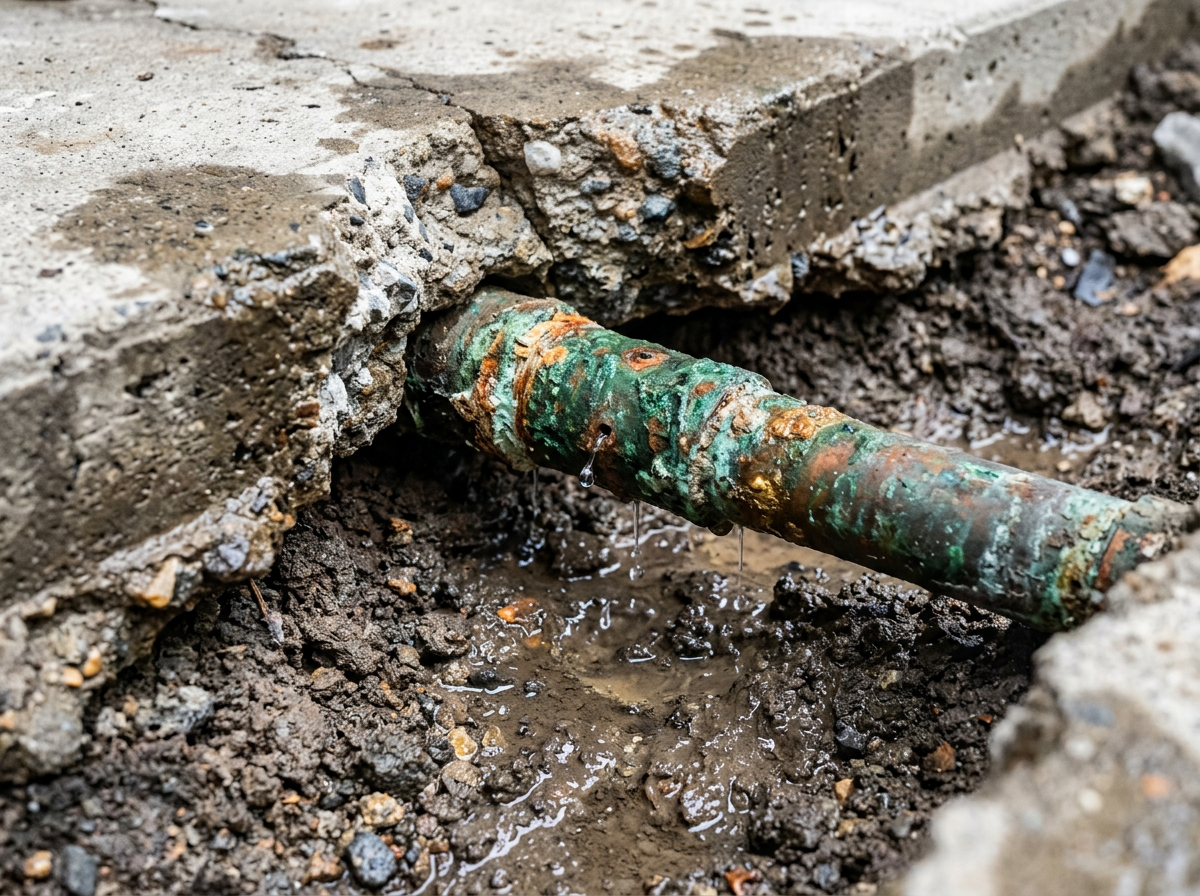
While any plumbing line can fail, slab leaks generally fall into two categories: freshwater supply line leaks and sewer/drain line leaks. It is incredibly helpful to understand the differences between the two, as they present different symptoms and require distinct repair approaches.
Freshwater Supply Leaks vs. Sewer Line Leaks
| Feature | Freshwater Supply Leaks | Sewer & Drain Line Leaks |
|---|---|---|
| Pipe Type | Copper, galvanized steel, or PEX supply lines | Cast iron, PVC, or clay waste pipes |
| Pressure | Highly pressurized (typically 40–80 PSI) | Non-pressurized (gravity-fed flow) |
| Water Quality | Clean, treated municipal or well water | Wastewater containing organic matter and bacteria |
| Common Symptoms | Sudden water bill spikes, warm floor spots, hissing sounds, rapid pressure drops | Musty odors, recurring drain backups, damp flooring near bathrooms/kitchens |
| Primary Causes | Electrolysis, hard water corrosion, high water pressure, friction | Shifting soil, tree root intrusion, pipe age, ground settling |
Slab leaks don’t just happen out of nowhere. They are usually the result of several slow-acting forces working against your plumbing system. The most common causes we encounter include:
- Pipe Corrosion: Older homes built between the 1960s and early 1990s rely heavily on copper or galvanized steel pipes. Over time, chemical reactions between the metal pipes, the surrounding soil, and the water flowing through them cause the metal to degrade, leading to tiny pinhole leaks.
- High Water Pressure: If your home’s water pressure is consistently running above 80 PSI, it puts immense, constant stress on your pipe joints. Over time, this pressure causes weak points to rupture.
- Poor Installation: If a pipe was slightly kinked during construction, or if it was allowed to rub against rough concrete or rocks without proper protective sleeve wrapping, the constant thermal expansion and contraction of the pipe will eventually wear a hole right through the material.
Understanding these underlying factors is key to knowing how to spot a slab leak before it becomes an emergency, especially if you live in an older Hill Country home with aging pipes, hard water, or visible signs of foundation movement.
Shifting Soil and Hard Water in Texas
In the Texas Hill Country, from Fredericksburg and Boerne to Kerrville and Bandera, our unique geology plays a massive role in plumbing health.
First, we have highly expansive clay soils. This type of soil acts like a sponge: it swells significantly when we get heavy seasonal rains and contracts drastically during hot, dry summer droughts. This constant, cyclical movement puts incredible physical stress on concrete foundations and the pipes buried beneath them. When the ground shifts, it can easily snap rigid copper or cast-iron lines, which is why reviewing a Texas homeowner’s guide to slab leaks can also help homeowners understand the local risks, insurance questions, and warning signs tied to foundation plumbing problems.
Second, our local water is incredibly hard. Packed with heavy concentrations of calcium and magnesium minerals, this water is highly corrosive to metal. As hard water flows through copper supply lines, it gradually eats away at the pipe walls from the inside out. When you pair this aggressive internal corrosion with the external stress of shifting clay soils, it creates the perfect storm for a foundation leak. This is why local knowledge is so critical, and why scheduling expert slab leak detection in Fredericksburg, TX is a common necessity for homeowners in our area.
The Hidden Danger of Foundation Damage
Ignoring the early warning signs of a slab leak can lead to catastrophic consequences for your property. When pressurized water continuously sprays beneath your home, it acts like a miniature pressure washer, slowly eroding the soil and sand that supports your concrete foundation.
As the soil washes away, it creates large underground voids or sinkholes. Deprived of solid ground to rest on, your heavy concrete slab will begin to sag, sink, and crack under its own weight. This structural shifting can throw your entire home out of alignment, causing walls to crack, doors to stick, and rooflines to warp.
Furthermore, all that trapped moisture has nowhere to go but up. Water will eventually seep through the porous concrete slab, saturating your subfloors, carpets, and drywall. This creates a highly toxic breeding ground for black mold and mildew, which can severely compromise your family’s respiratory health. If you are already dealing with the aftermath of a prolonged leak, securing expert water damage restoration for Boerne homeowners is the most reliable way to safely dry out your property and restore your peace of mind.
7 Critical Signs of a Slab Leak Under Your Concrete Foundation
Because slab leaks occur deep beneath thick concrete, you cannot simply look under the sink to find them. Instead, you have to train yourself to recognize the indirect physical symptoms, sensory clues, and structural changes that occur when water escapes under your home.
If you suspect something is wrong, acting quickly to identify the problem is essential. Paying close attention to these warning signs is the first step in spotting the signs of a slab leak before the damage spreads.
1. Unexplained Water Bill Spikes as Signs of a Slab Leak
One of the earliest and most reliable indicators of a hidden plumbing leak is a sudden, unexplained jump in your monthly water bill.
Most families have highly predictable water usage habits. Unless you have recently filled a swimming pool, hosted a large group of houseguests for several weeks, or significantly increased your lawn watering schedule, your water bill should remain relatively consistent from month to month.
If you open your utility bill and notice a 30% to 50% increase in water consumption with no change in your daily habits, a hidden leak is the prime suspect. A small, pressurized pinhole leak can waste hundreds of gallons of water a day, which quickly adds up to thousands of gallons over a monthly billing cycle.
We always recommend keeping a close eye on your billing history. If you notice a gradual upward trend over three or four months, or a sudden, dramatic spike, do not ignore it. It is one of the classic warning signs of a Texas slab leak.
2. The Sound of Running Water When Taps Are Closed
Your home should be completely quiet when no appliances are running and all faucets are turned off. If you are sitting in a quiet room and hear a faint, persistent sound of rushing, hissing, or whooshing water, you need to investigate.
When water escapes from a pressurized pipe beneath your foundation, it vibrates the pipe and the surrounding concrete. This vibration translates into a distinct acoustic signature that travels up through your floors. The sound is often most noticeable late at night or early in the morning when ambient neighborhood noise is at its lowest.
If you hear this sound, perform a quick check:
- Walk around the house and make sure all faucets, showers, and outdoor hose bibs are tightly shut.
- Check your toilets to ensure they aren’t actively running or cycling.
- Listen closely near your floorboards, especially in hallways or rooms adjacent to your water heater.
If the hissing or whooshing sound persists, you are likely listening to a pressurized water line spraying beneath your feet.
3. Warm or Damp Spots on Your Flooring
Have you ever walked barefoot across your kitchen or bathroom floor and suddenly felt a warm patch underfoot? If you do not have built-in radiant floor heating, this is a major red flag.
Most residential slab leaks occur in the hot water supply lines. Because hot water pipes constantly expand and contract as temperature changes, they experience more friction and abrasion against the surrounding concrete than cold water lines.
When a hot water line ruptures, the escaping hot water heats up the surrounding soil and concrete slab. This thermal radiation rises directly through your flooring, creating a localized warm spot.
Depending on your flooring material, you might also notice physical damage. Hardwood floors may begin to warp, cup, or buckle. Linoleum and vinyl tiles can unglue and lift, while carpets will feel damp, spongy, or completely soaked.
4. Sudden Drops in Water Pressure
If you step into the shower or turn on the kitchen faucet and notice a sudden, significant loss of water pressure, it means water is being diverted somewhere else in your plumbing system.
When a major break occurs in a water line beneath your slab, a massive volume of water escapes into the ground. Because water naturally follows the path of least resistance, this massive localized escape reduces the overall pressure available to the rest of your home’s fixtures.
To determine if the drop is systemic or localized:
- Test multiple faucets throughout the house. If only one faucet has low pressure, the issue is likely a clogged aerator or a localized fixture problem.
- If the drop in pressure is felt across every single shower, tub, and sink simultaneously, you are dealing with a systemic loss of pressure.
A sudden, unexplained drop in overall home water pressure often points directly to a ruptured pipe beneath the foundation.
5. Cracks in Your Walls, Floors, or Foundation
As water erodes the supportive soil beneath your concrete slab, the foundation will inevitably begin to settle unevenly. This movement places immense physical stress on the structural framing of your home.
You will often see the results of this shifting in your drywall and flooring:
- Drywall Cracks: Look for diagonal cracks radiating from the corners of door frames and windows.
- Sticking Doors and Windows: As the home’s framing warps, doors and windows that used to open and close smoothly will suddenly begin to stick, rub, or refuse to latch.
- Stair-Step Cracks: On the exterior of your home, look at the brickwork or stucco. Cracks that follow the mortar lines in a stair-step pattern are a classic sign of foundation movement.
- Cracked Tiles: Floor tiles may suddenly crack or pop loose as the concrete slab beneath them shifts.
If you notice these structural changes, you should seek professional assistance immediately. Homeowners in Boerne and Kerrville can find specialized help through professional slab leak repair to address foundation shifting before it compromises the entire structure.
6. Persistent Mold, Mildew, or Musty Odors
Moisture and darkness are the two primary ingredients required for mold growth. When a slab leak saturates the concrete beneath your floors, that moisture rises into your home’s living spaces, creating a humid, damp environment.
One of the first clues of hidden moisture is a persistent, musty odor that smells like wet socks, rotting wood, or a damp basement. This smell is often strongest near baseboards, inside closets, or in carpeted rooms.
If you pull back your carpets or inspect the baseboards in areas where you smell this musty odor, you may find:
- Dark mold spots forming along the bottom of the drywall.
- Peeling paint or bubbling wallpaper.
- Discolored, rotting tack strips beneath the carpet.
Mold spores can quickly become airborne, triggering allergic reactions, asthma attacks, and other serious respiratory issues. Fixing the leak is the only way to permanently stop the moisture source and protect your indoor air quality.
7. Using the Water Meter to Confirm Signs of a Slab Leak
If you have noticed one or more of the warnings above, you can perform a simple, highly reliable DIY check using your home’s water meter to confirm if water is actively leaking.
Here is how to perform the water meter test:
- Turn Off All Water: Ensure every single faucet, shower, washing machine, dishwasher, and ice maker in your home is completely turned off. Do not flush any toilets during the test.
- Locate Your Water Meter: Your meter is typically located near the street or sidewalk in a concrete or plastic box. Carefully remove the lid (watch out for spiders or dirt!).
- Check the Leak Indicator: Most modern water meters have a small, triangular dial, a tiny star-shaped wheel, or a digital flow indicator. If this wheel is spinning, even slowly, water is moving through your system.
- Take a Reading: If your meter doesn’t have a visible leak indicator, write down the exact numbers on the odometer-style display. Leave the water off and wait 30 to 60 minutes.
- Recheck the Meter: Check the numbers again. If the reading has changed, you have an active leak.
To verify if the leak is inside your home, under the slab, or in the main service line between the meter and your house, locate your home’s main water shutoff valve, usually near the water heater or where the main line enters the house, and turn it off. If the meter stops moving, the leak is inside your home. If it keeps moving, the leak is in the yard.
Professional Detection and Repair Options
If your DIY checks point to a slab leak, do not panic. Modern plumbing technology has completely revolutionized how we find and repair these hidden issues.
Years ago, finding a slab leak involved a lot of guesswork and jackhammering through perfectly good concrete. Today, professional plumbers use highly advanced, non-invasive technology to pinpoint the exact location of the leak before making any cuts.

When dealing with older properties, the complexity of these systems increases. Understanding the unique slab leak detection issues in older houses helps plumbers choose the most effective, minimally invasive tools for the job.
Non-Invasive Leak Detection Methods
We use a combination of specialized tools to locate leaks with pinpoint accuracy:
- Acoustic Listening Devices: Using highly sensitive ground microphones and geophones, we can listen through several feet of concrete and soil. Pressurized leaks make a distinct, high-frequency sound, allowing us to mark the exact spot of the pipe failure.
- Thermal Imaging Cameras: Because hot water leaks heat up the concrete slab above them, we can use infrared cameras to visually map the heat signature rising through your floors. This non-invasive scan instantly reveals the path of the leaking hot water line.
- Pressure Testing: By isolating different sections of your plumbing system and monitoring pressure changes, we can quickly narrow down which specific line is compromised.
- Video Camera Inspection: For sewer and drain lines, we feed high-resolution, waterproof cameras directly down the pipes to visually inspect the interior walls for cracks, root intrusion, or collapsed sections.
These advanced diagnostics help our team find the problem accurately before recommending the least disruptive repair path. For urgent or suspected foundation leaks, Holloway Plumbing provides professional slab leak repair focused on protecting your home from water damage and foundation movement.
Spot Repair, Rerouting, and Repiping
Once we have precisely located the leak, we will recommend the most cost-effective and least disruptive repair strategy for your home:
- Spot Repair: If your pipes are relatively new and in good overall condition, we can make a small, localized cut in the concrete slab to access and replace the damaged section of pipe.
- Pipe Rerouting: In many cases, it is smarter and less disruptive to abandon the broken pipe beneath the concrete entirely. We can run a new, modern water line through your walls or attic, bypassing the slab altogether. This completely eliminates the need to cut into your floors.
- Epoxy Pipe Lining: For certain lines, we can apply an internal epoxy coating. This liquid epoxy is blown through the pipe, where it cures to form a smooth, seamless, and highly durable barrier that seals all cracks and pinholes from the inside.
- Full Repiping: If your home has older, deteriorating copper or galvanized pipes that have suffered multiple leaks, we may recommend a full repipe using flexible, corrosion-resistant PEX piping to permanently protect your home from future foundation issues.
If you want to reduce the risk of hidden plumbing damage, routine leak awareness matters just as much as emergency repair. Learning how to detect and fix water leaks swiftly can help you recognize small warning signs before they become expensive structural problems.
A suspected slab leak is also a good time to think about related water damage risks inside the home. If moisture has already reached flooring, drywall, or baseboards, Holloway Plumbing can connect homeowners with expert water damage restoration for Boerne homeowners to help dry the affected areas and protect indoor air quality.
Preventive maintenance can make a major difference for Texas Hill Country homeowners dealing with hard water, shifting soil, and aging plumbing lines. These spring tips to prevent leaks and water damage offer practical steps for checking fixtures, watching for moisture, and reducing the chance of future plumbing emergencies.
Frequently Asked Questions about Slab Leaks
Can a slab leak fix itself?
No. A slab leak will never fix itself. Because the water flowing through your supply lines is highly pressurized, the constant force of the water will gradually erode the edges of the crack or pinhole, causing the leak to grow larger over time. Ignoring a leak will only lead to escalating water bills, progressive foundation erosion, and increasingly expensive structural damage.
How long does professional slab leak detection take?
In most cases, a professional leak detection visit takes between 2 to 3 hours. Our experienced technicians use advanced acoustic and thermal equipment to thoroughly scan your system, isolate the leak, and mark the exact location. Once the leak is located, we can walk you through your repair options and, in many cases, begin the repair work the very same day.
Does homeowners insurance cover slab leak repairs?
This depends entirely on your specific policy, but there is a general rule of thumb. Most standard homeowners insurance policies will cover the “tear-out” costs, the labor and construction required to access the broken pipe, and the “dwelling coverage” for any secondary water damage caused to your flooring, drywall, or personal property. However, the actual cost of repairing the plumbing pipe itself is typically excluded and must be paid out of pocket.
Conclusion
A slab leak is a serious plumbing emergency, but catching the warning signs early makes all the difference. By keeping a close eye on your water bills, listening for unusual sounds, checking for warm floor spots, and performing regular water meter checks, you can protect your home’s structural integrity and avoid thousands of dollars in unnecessary foundation repairs.
At Holloway Plumbing, we have been serving families and businesses across the Texas Hill Country, including Kerrville, Fredericksburg, Boerne, Bandera, and Comfort, for nearly 50 years. As a local, family-owned business, our reputation is built on fast, honest, and expert service you can trust.
Whether you need a routine plumbing check or find yourself facing a midnight plumbing crisis, our team is available 24/7 to help. Don’t wait for a small leak to become a major foundation problem. Contact our professional slab leak repair technicians today and let us protect your home.